Liquids
Free-flowing, foaming, oily or medium-viscosity products.
View optionsAutomatic filling machines dose liquids, pastes, powders or granules into your chosen pack. Compare the dosing method and container handling around product behaviour, fill range, cleaning needs and the accepted output required from the complete line.
Choose the product behaviour closest to yours to narrow the most suitable automatic filling methods.
Free-flowing, foaming, oily or medium-viscosity products.
View optionsCreams, sauces, honey, gels, adhesives and products that string.
View optionsFine powders, ingredients, coffee, detergents, seeds and pellets.
View optionsAcids, alkalis, oxidisers, bleaches and chemically demanding liquids.
View optionsPerfume, essential oils and selected liquids in rigid bottles.
View optionsContainer infeed, fill, cap, seal, label, code and inspect.
View optionsViscosity, particles, foam, temperature and pack shape can change the right dosing method—even when two products have the same name.
Compare how nozzle count, filling principle and product-contact materials can be adapted for different products, packs and output targets.
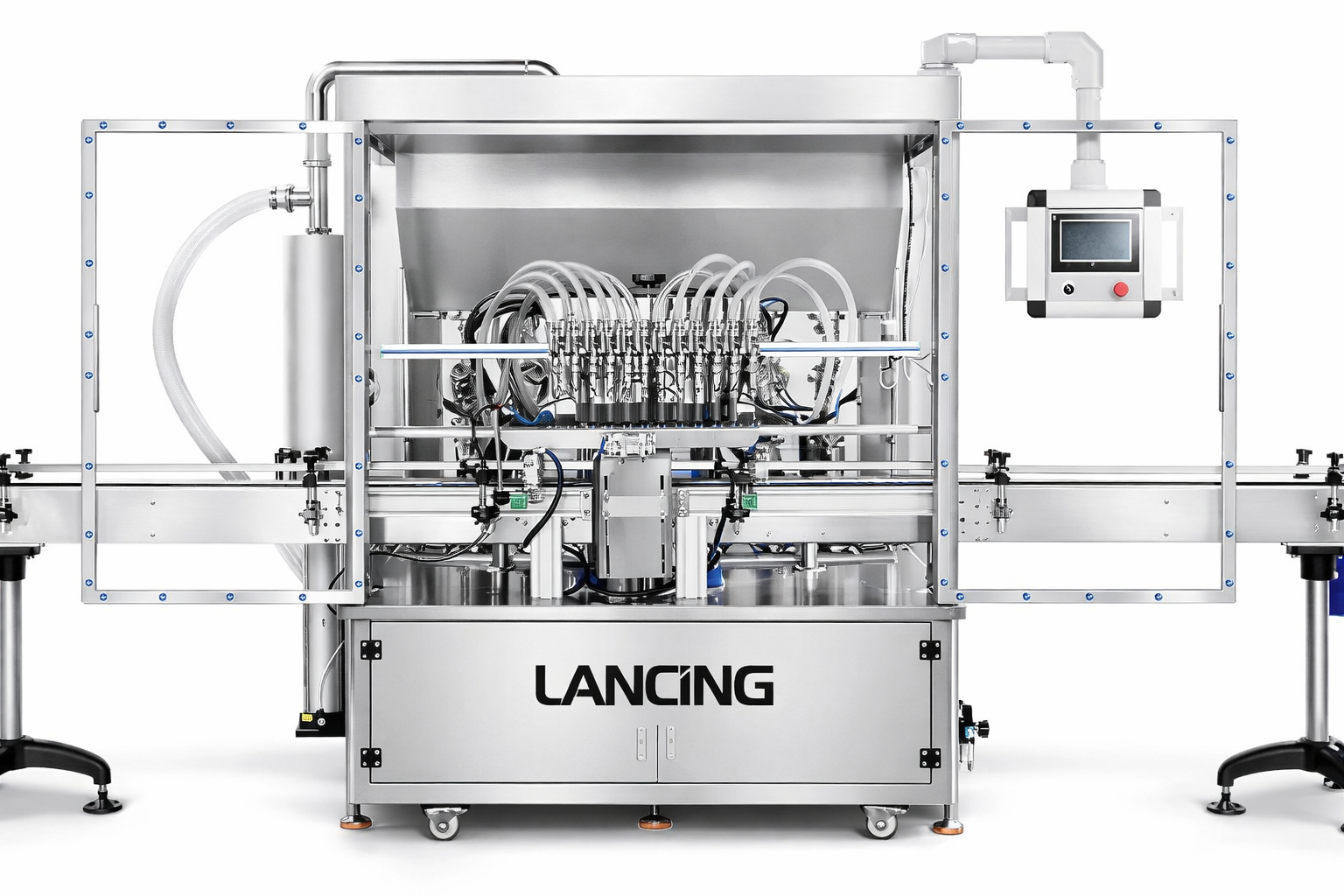
For higher-output paste and viscous-product projects where multiple nozzles and controlled product feed can reduce cycle time.
View servo fillers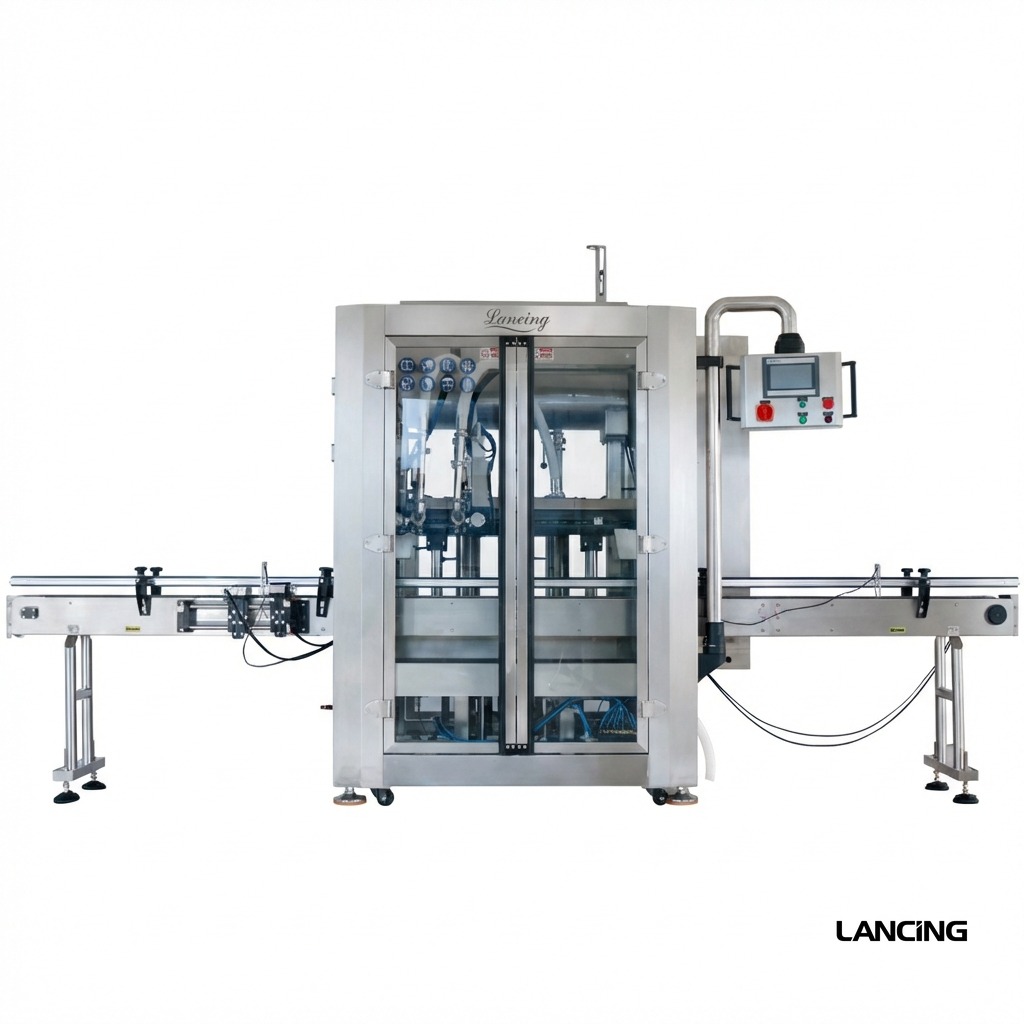
For lines that need filling while containers remain in motion, helping raise output without simply adding more stop-start stations.
View tracking fillers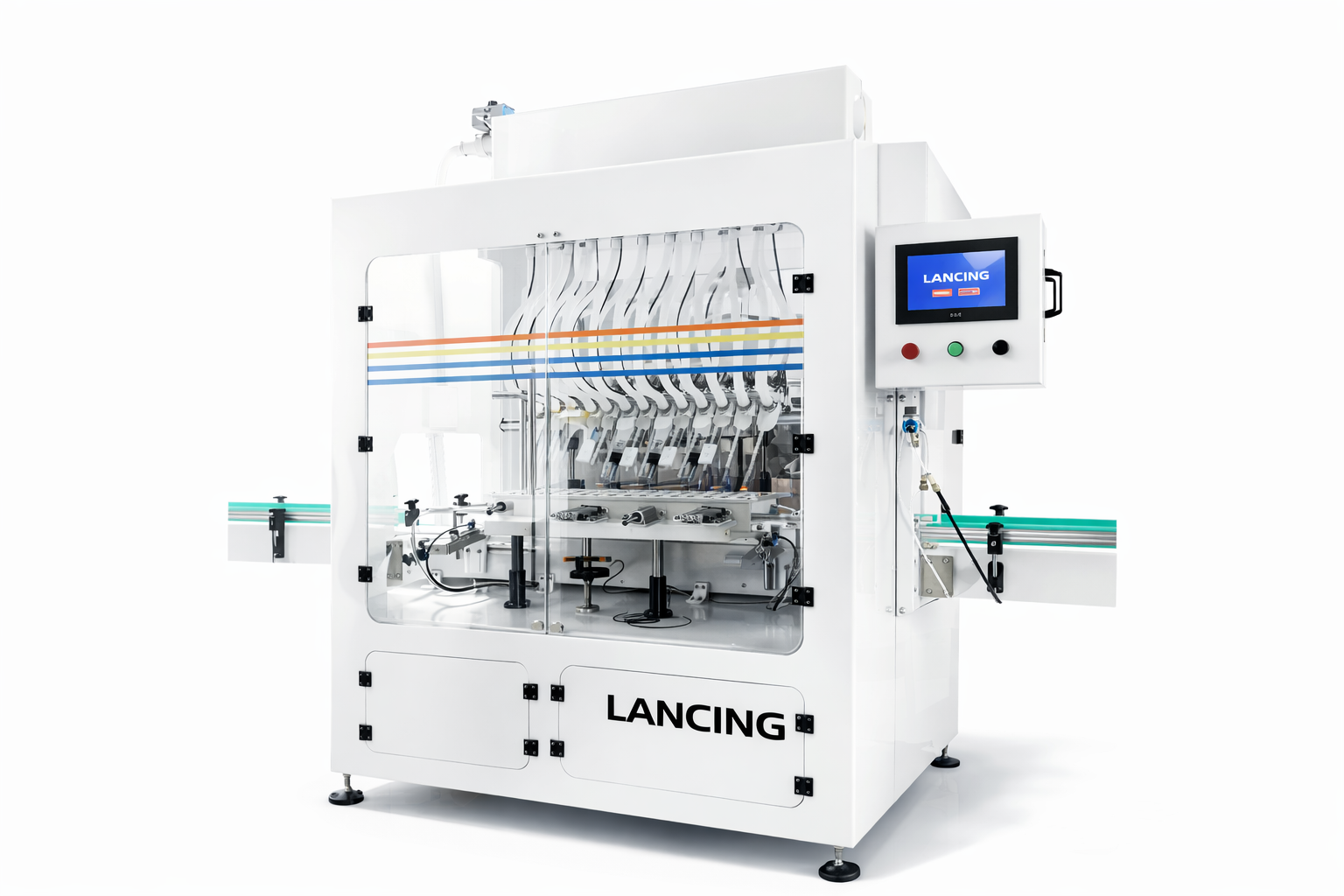
For strong acids, alkalis and aggressive liquids where compatible materials, enclosure and spill control are central to the design.
View chemical fillersA clear project route helps you confirm performance, interfaces and acceptance criteria before the machine reaches production.
Product, fill range, pack, closure, speed, cleaning and utilities.
Dosing principle, nozzle count, product feed and container journey.
Representative product and containers where the application requires it.
FAT, delivery, installation, training and production handover.

Use the demonstration to review container handling, guarding and station layout, then discuss the configuration needed for your own product and line.
See how bottles are presented, filled and transferred through a compact automatic system. Your final layout will be matched to your own pack and required speed.
Watch bottles move beneath the filling heads and review the filling sequence before discussing your own product, container and required output.
Start with your product sector to focus on the hygiene, safety, cleaning and pack-handling details that matter to your operation.
Sauces, oils, syrups, honey, jams, powders and ingredients.
View optionsCreams, lotions, gels, shampoos, serums and fragrance.
View optionsDetergents, acids, alkalis, lubricants and industrial liquids.
View optionsControlled bottle filling, closure security and documentation.
View optionsHeavy, sticky, stringing and industrial paste products.
View optionsFlexible recipes, formats and rapid product changeover.
View optionsSend your product, fill range, container and required output. We’ll use those details to compare realistic machine routes before you commit to a specification.
Straight answers to the questions buyers ask before shortlisting an automatic filler or complete line.
Start with product behaviour, fill range, container, target output, cleaning and line integration. The correct route may be piston, pump, flow, vacuum, auger or weigh filling.
Yes. Projects can include infeed, rinsing, filling, cap or lid application, capping, sealing, labelling, coding, inspection and conveyors.
A sample-led review can be arranged where product behaviour, container stability, particles, foam or cut-off create uncertainty.
Lancing Ltd is based at Unit 5A Jefferson Way, Thame, Oxfordshire, OX9 3SZ, United Kingdom.
These terms describe different aspects of a filling system. A piston or pump moves product; a net-weight arrangement measures the product mass in the container. Compare the proposed complete dosing and handling method, including how it is calibrated and checked.
A piston measures a displaced volume through its cylinder and valves. Review it when the product can enter and leave that path consistently, including the largest particles and most viscous recipe. Ask which dosing modules cover the minimum and maximum fill. Record results by head after start-up and replenishment so an average does not hide one poorly fed channel.
The pump type, control method and product-contact path determine the practical duty. Compare product compatibility, flow stability, cleaning and nozzle cut-off together. For a product range with frequent changes, include product recovery and the work needed to prepare the next recipe. A pump name alone does not establish the quantity-control method or application suitability.
Net-weight filling uses the measured product mass after accounting for the empty container. Review tare capture, pack stability and the final flow shut-off. Include the effect of connected hoses, conveyor contact and normal line movement on the weighing position. Ask how the independent accepted-pack check relates to the quantity controlled by the filler.
Use the same product condition, containers, fill range and accepted-output definition for each option. Include the smallest dose, a routine pause and the next product refill. Compare dose results, rim cleanliness and the complete handling cycle. Only then decide whether another filling head or different conveyor arrangement would address the limiting task.
These answers cover the evidence and acceptance decisions that make quoted performance easier to compare.
Quoted output can be based on different products, doses, head counts and line assumptions. Compare sustained performance using the same product condition, container, fill quantity, accuracy requirement and downstream equipment.
Agree the representative product and packs, target dose and tolerance, sustained output period, reject rules, changeover scope, cleaning demonstration, utilities and the evidence that will be recorded at FAT and SAT.
Use these resources to move from an initial machine search to a controlled brief, representative trial, installable layout and acceptance plan.
Decide whether semi-automatic, compact automatic or integrated operation fits the batch pattern, labour task and changeover frequency.
Connect the dosing method to bottle stability, neck opening, nozzle behaviour, closure-zone cleanliness and capping handover.
Compare engineering scope, assumptions, trials, controls, integration and documentation rather than headline machine descriptions.
Define the question for a product trial, then convert the accepted scope into FAT, SAT and commissioning evidence.
Control pack infeed, indexing, transfer, accumulation, operator access, utilities and fault recovery around the filler.
Separate product, channel, container and line causes, then build maintenance and spares around real failure consequences.
Send production product and pack information, current process photographs or video, fill range, target output, cleaning expectations and the intended stations before and after filling. Lancing can identify which decisions are ready for quotation and which need samples, drawings or a trial.
These questions turn an initial machinery enquiry into an engineering brief that can be trialled, quoted and accepted.
Decide what the production system must achieve before comparing equipment descriptions. Record the products, dose range, containers, closures, sustained output, cleaning method, operator role, site constraints and downstream process. A brochure can show a machine category, but it cannot prove suitability for an undefined duty.
Separate mandatory requirements from preferences and unknowns. Unknown product or pack behaviour should become a trial question rather than an assumed specification.
A representative production day includes changeovers, refills, short stops, cleaning and normal line interactions. Peak speed describes only a favourable moment and can hide the events that determine useful shift output. Buyers should model the actual product mix and time available for production.
Use the output calculator for scenarios, then define which assumptions must be demonstrated during acceptance.
An enquiry is engineering-ready when the product, pack and production boundaries are clear enough to identify a practical dosing and handling route. Include representative product information, dose range, container and closure drawings or samples, output, cleaning, environment, utilities and existing line interfaces.
Where a value is unknown, state the uncertainty and the evidence needed to resolve it. That is more useful than a guessed figure.
Specify filling and closure handling together whenever the filled neck condition, foam, product tail, container stability or transfer time can affect capping or sealing. A filler can meet its dose requirement while leaving a wet thread or unstable bottle that fails at the next station.
Include production closures in trials and review the complete bottle journey through the automatic filling-line guide.
Write down every assumption that could change machine scope, performance or acceptance. Typical examples include product temperature, density, viscosity, bottle tolerance, available utilities, operator loading, upstream pressure, downstream capacity and the formats included in the base price.
Give each assumption an owner and resolution point. An assumption should never be allowed to appear later as a confirmed fact.
Send the product, pack and production evidence that applies to your line. Lancing can identify the next trial, specification or integration step without treating an assumption as a confirmed result.
Broad machine labels are useful for a first shortlist. The final selection should be controlled by the product and pack condition that is hardest to run repeatedly.
Include the actual product, pack, fill range, temperature, target output and downstream operations. Lancing can compare practical routes and define where a representative trial is needed.
These project types need a more specific review than a general liquid or paste category.
Include the real product, pack, fill range, temperature, target output, cleaning method and connected line operations. Lancing can identify which machine routes remain practical and where a representative trial is needed.
These routes answer distinct buyer questions that sit beneath the broad liquid-filling category.
Decide whether the project is controlled by product displacement, measured flow, mass, visible level or an integrated fill-and-cap sequence. Lancing can then compare the machine route with the real product and pack.
Send the product, pack and output details that matter. We’ll compare the most practical dosing and line options for you.